Interaction With ALS v2.6, Stylized Fantasy Provencal art pack
The brief
An undercover agent has to rescue a childhood friend, kidnapped by a rival family and put on display on a mountain in Provence.
I wanted a level in the spirit of Uncharted and Tomb Raider that supports stealth, combat and exploration. I split it into four areas, each suggesting one way to play, so the player always has a hint about what kind of challenge comes next.
I adapt my sketching process to the genre of game I'm designing for. Third-person shooters: a wider field of view means more powerful vantage points through verticality.
Level flow
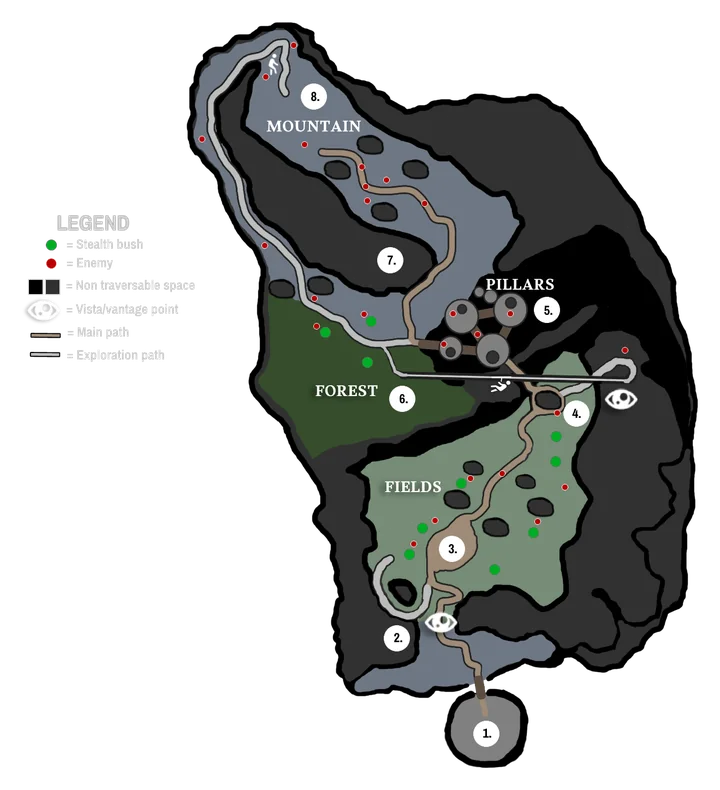
Eight beats, from the tutorial at the foot of the mountain to the windmill at the top.
Arrival
Tutorial
Establishing shot
Vantage point
Stealth through the fields
Stealth
Crossing
Combat
Assault on the Pillars
Combat
Forest crossing
Branching path
Windmill approach
High-intensity combat
Finish
Rescue
Top-down map · numbers match the level beats
Design decisions
Funnel before the reveal
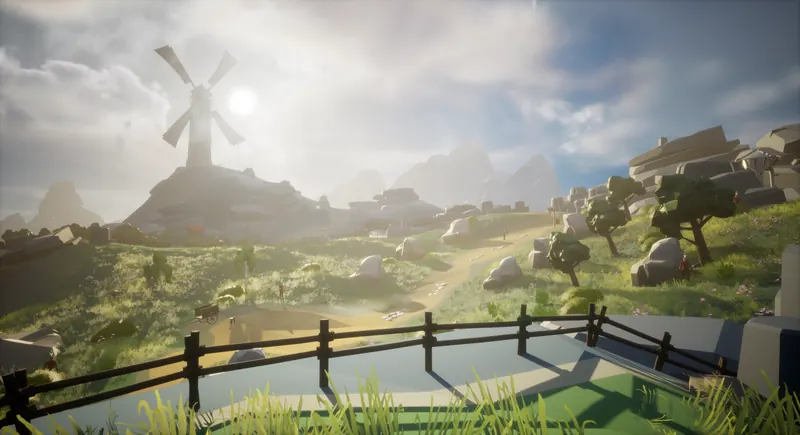
After the first climb, the path funnels the player into the main area. The valley and the windmill open up as they arrive, with the camera still in their hands. No cutscene takes control away.
Principle Compression and release. A tight space makes the next open space feel larger, and a reveal the player walks into feels like their own discovery.
The funnel and the reveal · 17 s
Grounding the player
Right after the objective is shown, a forced drop takes the player to a lower level. The windmill is now above them, and the rest of the level is the climb back up toward it.
Principle Embodied cognition. We understand height and effort through the body, so a goal above the player is distance they feel, not just see.
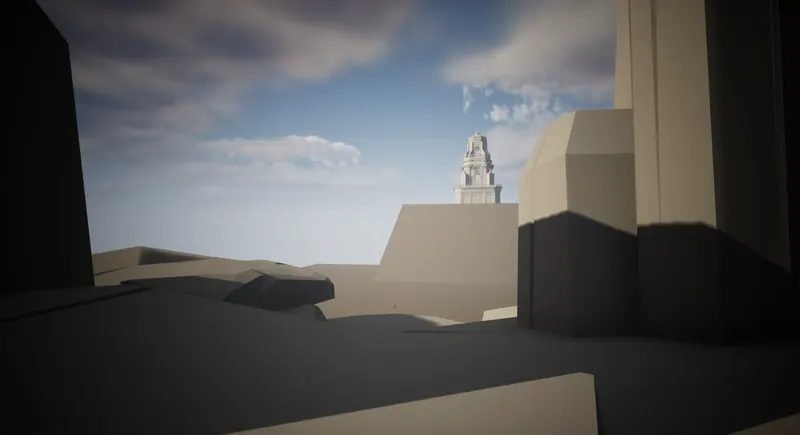
Foreshadowing the landmark
Combat that reads at a glance
Enemies gravitate toward the roads and open ground. Bushes are scripted to block their line of sight, so cover is both a visual and a mechanical promise.
Principle Affordances. If something looks like cover, it should work as cover. Players learn the rule once and can plan with it.
Sneaking through cover · 7 s
Composition borrowed from film
Key views are framed with the rule of thirds and one focal point. Guiding colours, leading lines and mesh placement point the way, so the level needs no signs or markers.
Principle Cognitive load. Every competing cue costs attention, so fewer, stronger cues make the right path obvious.
Framing the windmill
What I learned
As a student, I underestimated the cost of building on code I had not written. Debugging and optimisation took more of the eight weeks than planned, so I now budget time for it at the start of a project.
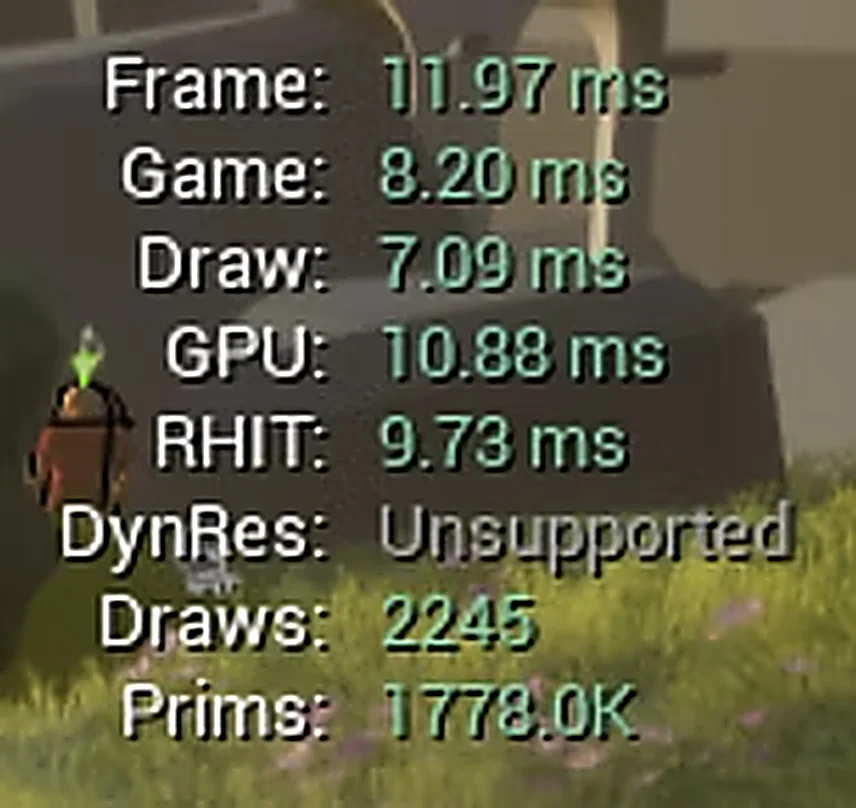
Art and composition were the most enjoyable part, and also took longer than intended. A moodboard and performance monitoring ran alongside the whole project and shaped both the look and the design decisions.